For smaller companies embarking on sustainability reporting for the first time, the primary question often is: what exactly needs to be reported? The voluntary standard designed for smaller enterprises provides a straightforward answer. Its introductory level, known as the Basic Module, outlines a specific list of disclosures, helping businesses understand what is required in advance and avoid ambiguity.
A Well-Defined List
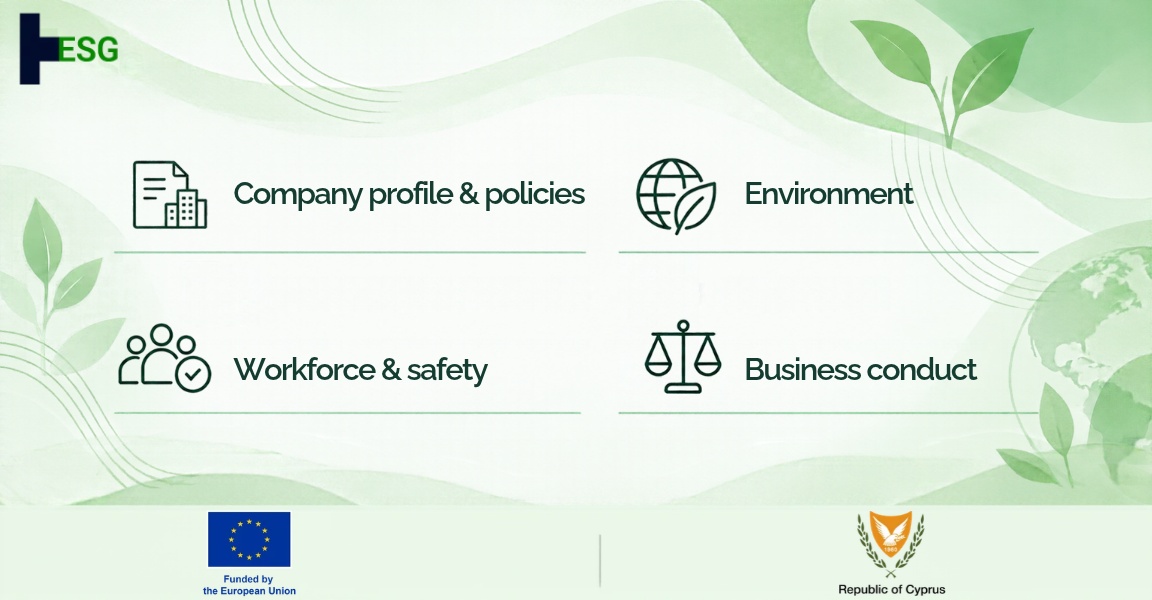
The Basic Module is structured into disclosures B1 through B11. Collectively, these encompass general company information; policies and future plans; energy consumption and emissions; pollution; biodiversity; water usage; resource consumption and waste management; workforce details; health and safety measures; remuneration, collective bargaining, and training; and any significant convictions or fines related to corruption and bribery. The 2026 standard also includes proportionality provisions, making certain data points optional for businesses with 10 or fewer employees (European Commission, 2026).
Much of the data already exists
A reassuring point is how much of this information companies already have. Companies can extract energy consumption and emissions data from electricity and fuel invoices; workforce details, health and safety records, and remuneration data are typically maintained in HR systems; and company information is documented for other purposes. For many companies, the initial report focuses more on organizing and collating existing data than on creating new information.
Not every disclosure applies to every business
The disclosures do not function uniformly for every business. All entities using the Basic Module must report some disclosures, while specific data points apply only under conditions outlined in the standard (EFRAG, 2024). Reviewing these conditions alongside each disclosure helps companies ascertain the necessary information without exceeding the module's defined scope.
The Importance of a Clear Framework
A map of disclosures B1 to B11 offers an SME a clear understanding of the reporting framework. In the TRUST-ESG approach, this map's significance goes beyond administrative completeness. It helps companies identify existing records, determine which business functions need to contribute, and pinpoint areas that need support or improvement.
A practical first step is to review the Basic Module disclosures and align them with the company's existing records. A business might find that some necessary information already exists in operational, financial, or HR records, while other data points require further collection. Perceiving the Basic Module as a defined list, rather than an open-ended question, makes it a more manageable entry point.
Organizing the work by data owner, rather than treating the report as a single task, can also help. Company information may reside with administrative staff, energy data with finance or facilities, and workforce information with HR. Mapping each disclosure to a responsible individual and source record creates a clear plan of work. The final publication should only be completed once all disclosures required under the chosen module have been reviewed and completed, or any allowed non-disclosure has been addressed according to the standard.
Reviewing the Basic Module and identifying the already available figures provides a quick assessment of the business's readiness for a first report.